Remote Workflows for Mobile Locksmiths: The Van, the Bench, and the Backup Brain
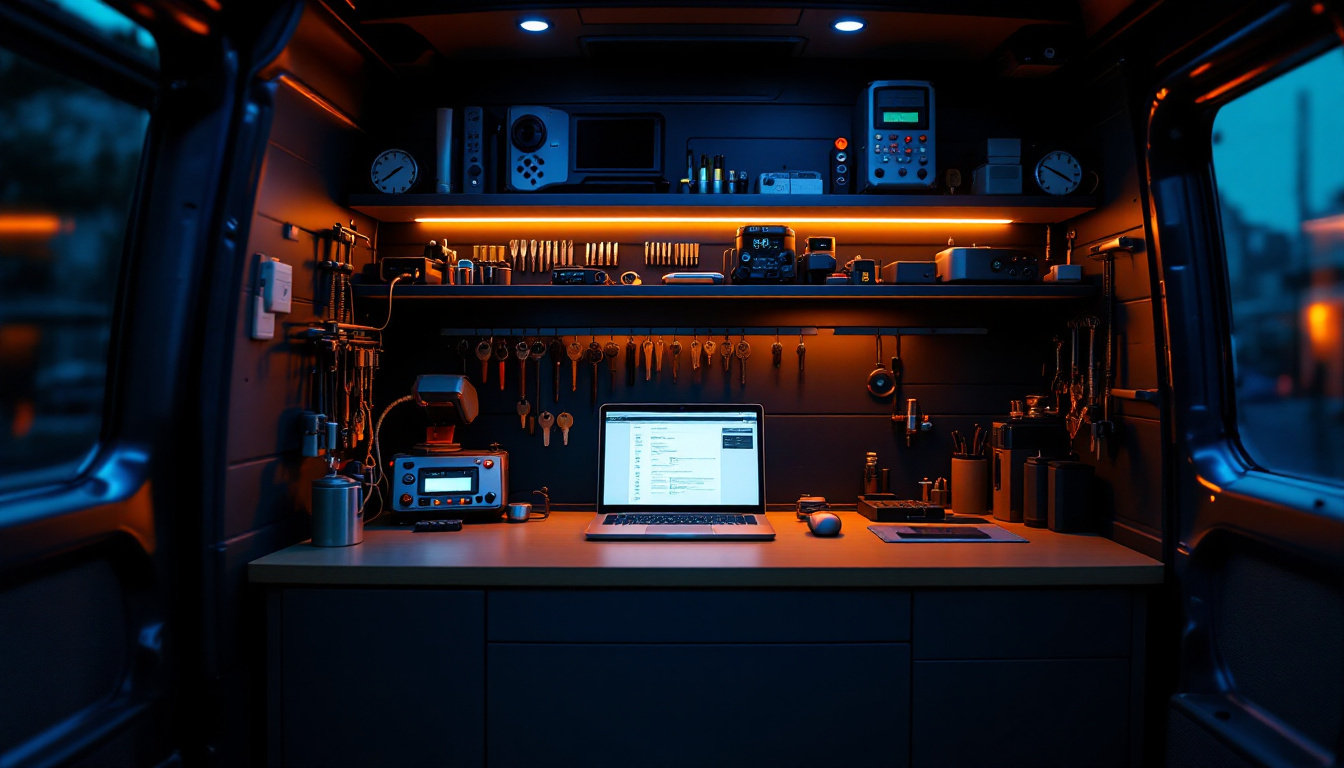
How mobile automotive locksmiths use remote sessions — reaching the shop bench from the van, second opinions mid-job, covering the solo operator's day off, and the credential lines that never move.
Remote Workflows for Mobile Locksmiths: The Van, the Bench, and the Backup Brain
TL;DR
A mobile locksmith's operation lives in two places that are never together: the van (you, the tools, the vehicle) and the shop bench (the PC with the software, records, files and lookups). Every day includes a moment when the thing you need is at the other one. Remote sessions close that gap — the bench reachable from any driveway, a colleague's eyes available on a hard job, the solo operator's day off actually covered — while the physical trade and every credential requirement stay exactly where they were. This post maps the four workflows, the van-side setup that makes them reliable, and the honest lines that don't move.
The two-place problem
The van carries the trade: cutters, programmers, blanks, you. The bench carries the institution: the software licenses that live on one machine, the customer records, the code files and invoices, the browser profile with every portal logged in. The architecture problem of mobile work is that jobs happen at vehicles and institutions live at benches — and the traditional bridge is a return trip.
Count a month of those: the lookup that only works on the shop PC, the file that's "on the bench machine," the invoice a customer needs re-sent from the road, the license that must be renewed on that box. Each is twenty to forty windshield minutes. The remote pattern replaces nearly all of them with a browser tab in the van.
Workflow one: the bench, reachable from the driveway
Set the bench PC up as an always-on station — the same unattended-access build shops use: agent as a service, named login, MFA, Admin Mode so a locked screen or pending reboot never strands you. From the van's laptop (or honestly, a phone in a pinch — the browser-side architecture means anything with a screen works), the bench is thirty seconds away:
- The record or code file checked mid-job, browsed and grabbed without a trip;
- The invoice re-sent from a parking lot;
- The bench-bound software consulted while the vehicle is in front of you;
- End-of-day bookkeeping done from home, because the bench no longer requires the shop.
The physical work — cutting, programming at the vehicle, testing — stays with the hardware in the van, where it belongs. What the session removes is the geography tax on everything else.
Workflow two: the second pair of eyes
Every mobile locksmith knows the stubborn-vehicle moment: forty minutes in, the sun is unhelpful, and what you need isn't a tool — it's a rested brain. The remote version of "come look at this" costs a phone call: a trusted colleague opens a session to your shared bench machine or views your session, sees actual data rather than a phone photo of a screen at an angle, and chats precise suggestions — exact menu paths, exact values — while you work the vehicle.
The second-opinion pattern matters double in this trade because the jobs are solitary by design. And the session being recorded means the hard-won fix becomes a library entry — the training-loop benefit, scaled to a two-person mutual-aid arrangement.
Workflow three: the solo operator's day off
The one-person shop's dirty secret: there is no day off, only days with the phone answered from somewhere else. The remote arrangement that softens it — a trusted colleague with a named, MFA-protected, logged account on your bench machine — can field the software-side questions (lookups, records, re-sends) while you're at the lake, and the audit log means you can see exactly what was touched, and revoke in one click when the arrangement ends.
Note what this is not: it is not credential-sharing. Their access is theirs, under their name, to your machine — the security checklist applies at full strength precisely because a locksmith's bench is a sensitive machine. Which brings us to the lines that never move.
The lines that never move
Stated as plainly as we state our own product limits:
| Never changes | Because |
|---|---|
| NASTF VSP registry requirements | The credential is the person's, wherever they sit |
| Positive ID and ownership verification | The job's legitimacy is physical, not architectural |
| OEM security-gateway logins | Authenticate the tool and credential, not the geography |
| Who performs security-relevant work | A session shares screens, not authority |
| The physical trade itself | Keys are cut and programmed at vehicles, by hands |
A remote session never launders a job that wouldn't pass in person, and any tool marketing that implies otherwise deserves your suspicion — ours included, which is why this table is here.
And the product-honesty line, standing as always: USB passthrough — forwarding programming devices themselves — is in development on IgniteRemote, included in the plan when it launches. The workflows in this post need none of it; they run on what ships today.
The van-side setup, in one afternoon
- Bench PC as a station: service-level agent, MFA, Admin Mode, recording on.
- Van laptop: nothing to install — a browser and your login. Test from the driveway, not during an emergency.
- Hotspot discipline: the session is light, but park the connection habits from the latency guide anyway — stability beats speed.
- The mutual-aid account: if you run the colleague arrangement, set it up as a named user now, while it's calm.
- One real week: count the return trips that didn't happen.
Cost of the whole arrangement on IgniteRemote: the one plan, $24.90/month or $249/year, unlimited computers and technicians (pricing) — the van laptop, bench machine, home PC and the colleague all covered without seat math. For a trade whose margins are measured in drive time, the return trips alone settle the question in the first month.